

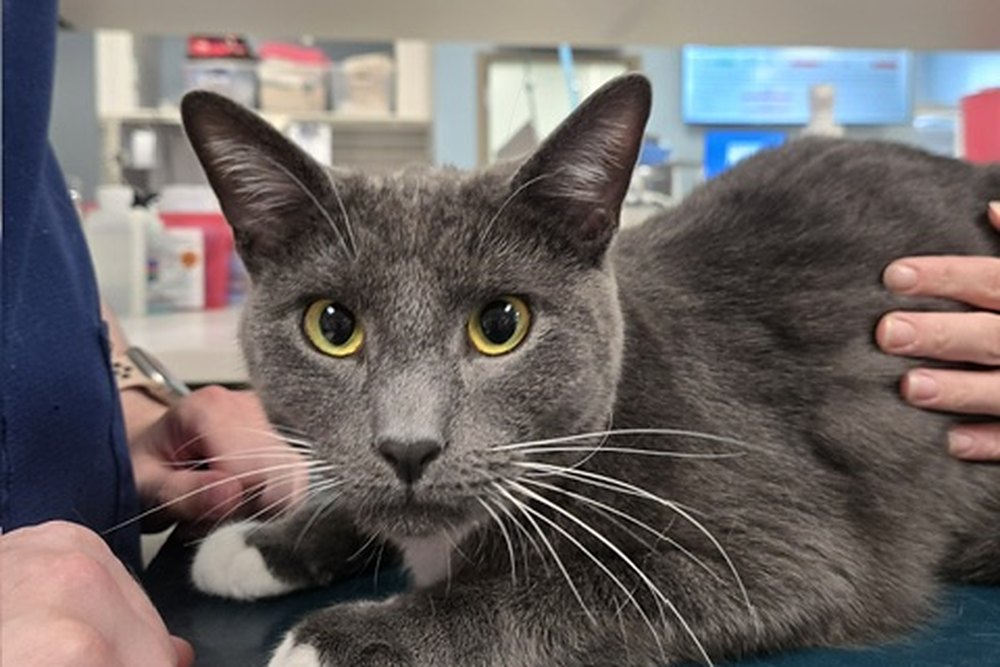
Annual wellness exams are extremely important for cats. It's easy for a pet parent to skip a visit to the veterinarian when Kitty runs around, leaps onto furniture, snuggles in for quality lap time and shows incredible ferocity in the presence of death-defying flying insects. If Kitty is acting normally, then no vet visit is needed, right? Nope. Wrong.
Without an annual wellness exam, there's no way to know if Kitty is as healthy as she seems. Veterinarians check body functions from whiskers to tails to learn whether there are any subtle concerns for underlying disease.
"Cats are skilled at masking discomfort or pain," said Dr. Bailey Ryback. "During a wellness exam, one of the things we check is oral health. Dental issues are actually very common in pets. We look for general gingival health and calculus on teeth, and some cats develop painful oral resorptive lesions caused when the body destroys the tooth.
"When we see this, we recommend a comprehensive oral health examination and treatment under anesthesia so we can remove the remaining tooth structure and get the cat feeling more comfortable. And sometimes cats - usually seniors - develop growths in their mouths that pet parents aren't likely to spot during normal interactions."
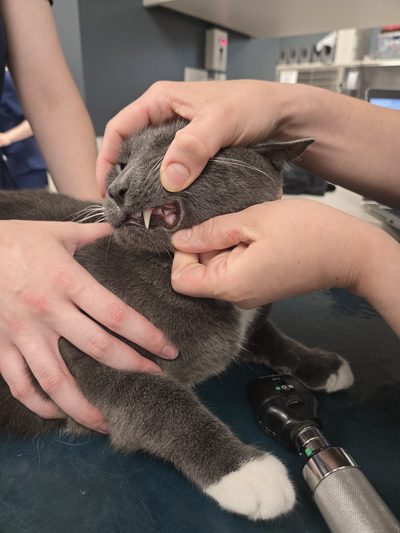
"I told you I don't have dentures! These are my healthy teeth!"
We know feline eyes are so sharp they can spot a ghost from 20 yards away, and they can focus with such intensity that they intimidate humans who are late with meal service. Those beautiful orbs need to be checked though, to look for signs of melanomas, cataracts and other eye changes. "We also need to ensure their ears are in good shape," said Ryback. "We look to ensure eardrums are intact, and there are no signs of polyps, ear mites or infection."
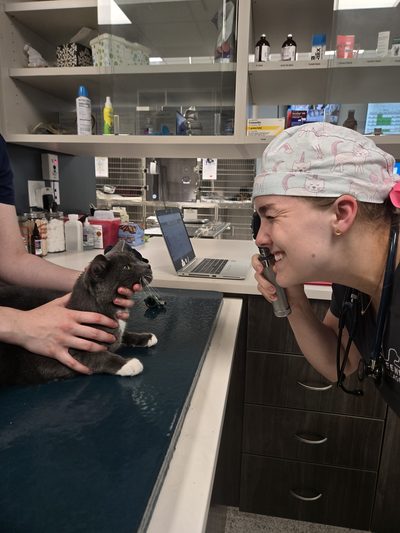
T-Bone's bro evaded capture for the photo shoot, but T-Bone is considering a modeling career. "Yes, Mom. My eyes are beautiful. Yours are nice too."
Ryback explained that when vets are massaging Kitty's throat and facial areas, they are not just providing the cat with a chin snuggle. "We can determine whether lymph nodes are swollen, which can be a sign of infection. We feel whether thyroid glands are enlarged, which might be an indicator that something else is going on. For example, sick or senior cats might have hyperthyroidism, and we can treat that."
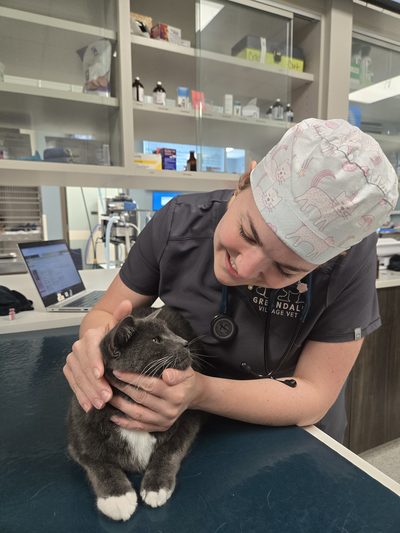
"Yes, my lymph nodes and glands are fine. Can I have a wee chin rub now?"
Just like when people age and get stiff and start feeling joint pain, Kitty will also develop age-related conditions. "Arthritis is common, but it won't necessarily be obvious," said Ryback. "While we're checking that, we also want to make sure the paws don't have corns, and the pads and nails are healthy."
Skin can reveal hidden troubles, too. "It's fairly common to see cats who live with dogs to get fleas," said Ryback. "Dogs might be treated monthly with preventives, but a lot of times cats in the same household are not, leaving the cat vulnerable. Fleas, of course, can lead to serious troubles. Fleas are parasites that can cause horrific itching and pain. Incessant scratching in turn leads to open skin wounds that are breeding grounds for infections. Flea bites can also cause anemia in kittens, and that can be deadly.
"Fleas are hosts for tapeworms, so when a pet swallows an infected flea, the tapeworm enters the pet's digestive system," said Ryback. "We look closely for signs of fleas, but the skin has a lot more to tell us, too. We look for growths or ectoparasites that are more common with cats who go outside, and we also examine whether there are signs of overgrooming that might indicate allergies or stress."
Many cats are less than thrilled about someone touching their bellies, but vets learn a lot from a cat's abdominal area. Doctors palpate the kidneys for symmetry, smoothness and appropriate size. "We also poke around to see if we can feel the liver. We shouldn't be able to, because it is within the rib cage, but if we do, it's an alarm signal," Ryback explained. "We also feel the bladder for a pain response and whether it's the appropriate size. We feel the intestines to see if there is any thickness, and we feel for excess gas or any pain in the abdomen consistent with gastrointestinal disease. The belly gives us a wealth of information."
When the doctor runs her hand down Kitty's spine, she's not just giving her a stroke. Depending on Kitty's response, the back and tail might hold clues there is spinal pain or arthritis. Doctors look under the tail, too. Is the area clean? Are there signs of skin problems? Is the anatomy correct?
Lastly, because rabies is such a severe disease, Greendale Village Vet requires all patients, including indoor cats, to be current on rabies vaccinations. "That protects the pets as well as the people interacting with them," said Ryback. "There are other important vaccinations for good health. We recommend vaccines based on the cat's lifestyle, so they get just what they need."
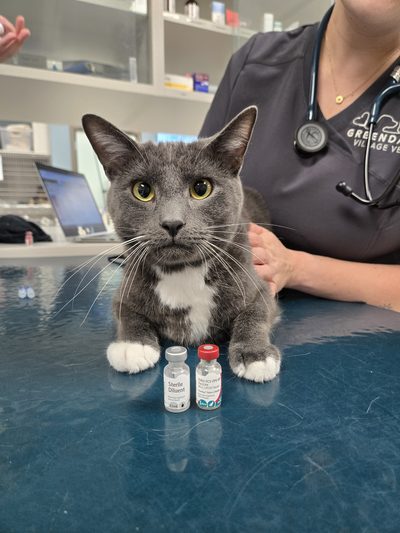
"I'm the bravest boy I know when it comes to getting shots. Mommy said so."
"Overall, our goal for cats is to try to catch disease processes as early as possible. Cats are truly masters at disguise, but there are so many things we can do to catch, prevent or slow down common disease processes," she said. "An annual exam can really improve a cat’s overall health and life, and it's a nice opportunity to give families ideas about how to entertain and enrich their fur babies."
Wruh-whroh. Kitty spotted the carrier. Kitty knows that might lead to an outing that won't be as entertaining as a flying catnip-mouse theme park. "We have certainly heard of the humorous escapades (think cat spots carrier, found hours later in a toy box blending in with the stuffies.) And of course there are many less-than-humorous ordeals pet parents suffer just to get a cat in a carrier. We are aware of those challenges, so we often prescribe Kitty a mild anti-anxiety medication to prepare for an easier process."
Greendale Village Vet doctors offer traditional veterinary and integrative services for cats and dogs. The clinic now also offers online appointment services, so pet parents can easily choose exam times that easily fit their calendars. To make an appointment, visit greendalevillagevet.com or call 414-421-1800.


